
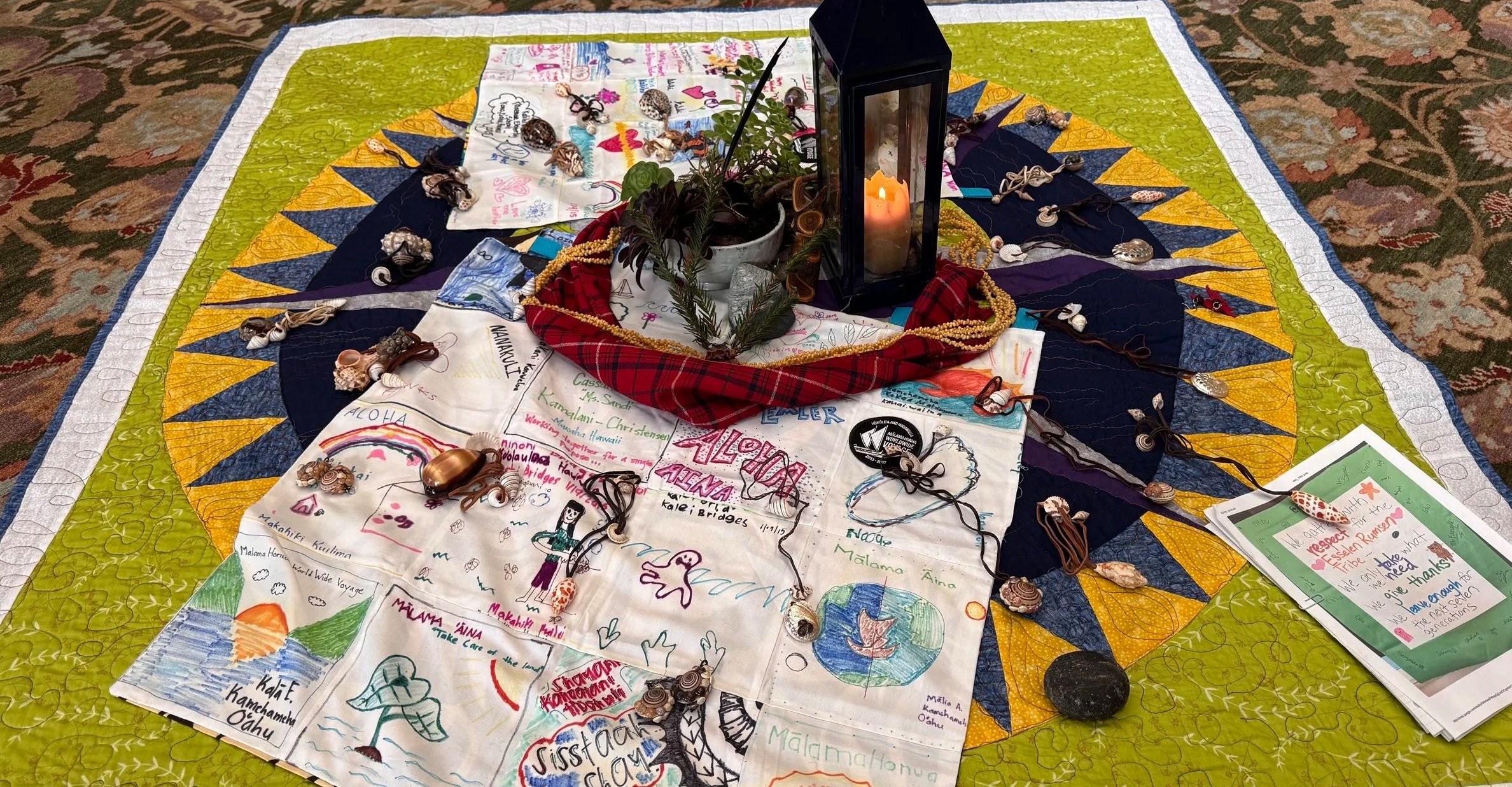
This work began with an invitation.
Recognizing the increased interest from schools wanting to include Indigenous perspectives, Monterey area Tribes asked the Collaborative for Right Relations to help educators build the knowledge, sensibilities, and relationships necessary to collaborate with Tribes in ways that honor right relationship and ensure inclusion of all tribal voices.
Why this project matters
In response to this invitation, we launched 2 pilot projects, guided by the vision and efforts of a small group, including initial invitation and catalyzing from Cari Herthel (Esselen), and a leadership circle of Stan Rushworth (former professor of Native American Literature), Gregg Castro (t'rowt'raahl Salinan / rumsen & ramaytush Ohlone), Jenny de la Hoz (educator), Violet Smith (Rumsen Ohlone Tribal Community), Erin Myers Madeira (Collaborative for Right Relations), and Maya Hoffman (Collaborative for Right Relations). Joshue Orozco and Johanna Kroenlein were core to the success of the school-wide pilot.
The timing is significant. Assembly Bill 1821 mandates teaching about the mistreatment of Native Californians throughout California history. Despite broad desire that the educational experiences in the area are inclusive of the historic and contemporary experiences and leadership of Indigenous Peoples, Indigenous perspectives, Indigenous teaching approaches and Indigenous Peoples have been systemically excluded from education.
The Work
The 2 pilot projects were offered in response to both the many teachers sharing they want to authentically and appropriately weave Indigenous perspectives and pedagogies into their classroom teaching, as well as requests from our Monterey area Indigenous neighbors and educators that they want our schools to have the knowledge, skills, commitment and understanding to teach about Indigenous histories, knowledge systems, and contemporary experiences.
School-Wide Curriculum Pilot
Over the course of the school year, the Collaborative for Right Relations worked with 15 Stevenson faculty members to deepen their understanding of Indigenous perspectives and pedagogies and support them in bringing that learning into their classrooms. The pilot engaged teachers across disciplines, culminating in a full-day experience at Indian Canyon for the entire 9th grade.
Summer Institute Pilot: Walk Together in Right Relations, Teaching with Purpose, Belonging, and Respect
By weaving together Indigenous and Western teaching styles, this workshop supported teachers and administrators to:
Experience Indigenous pedagogy firsthand through story, reflection, dialogue and land connection.
Explore and begin to design classroom applications with guidance from cultural teachers and colleagues across grade levels.
Build community and confidence for integrating Native content respectfully and meaningfully.
“As a teacher, I have the ability to share what I have learned, bridge communities and provide the opportunity to those who have been made invisible to have their voice heard.”
The Impact
School-Wide Curriculum Pilot: By year’s end, Indigenous perspectives were woven across history, English, and science, including a new science unit on Traditional Ecological Knowledges that colleagues can reuse and adapt. Faculty reported that their understanding of storytelling as science shifted and that experiencing Indigenous pedagogy during the facilitated sessions unlocked their ability to develop curriculum. The pilot created a working model for what meaningful weaving of Indigenous perspectives and pedagogies across a grade can look like.
Summer Institute Pilot: The workshop helped educators move from good intentions to purposeful action, with a deeper understanding of what responsible teaching requires and clear next steps for their own classrooms. Participants reported the greatest growth in understanding Indigenous pedagogy and teaching practices, alongside a dramatically increased sense of agency to begin this work.
“It was truly life changing and I’m so grateful for the opportunity to grow in my personal knowledge and as an educator.”
